Electromagnetic Compatibility Laboratory
Precision electronics testing
Electromagnetic Compatibility (EMC) Laboratory
The EMC laboratory tests whether devices emit harmful interference and remain immune to electromagnetic waves, electrostatic discharges, and other types of interference encountered in real-world operating environments.
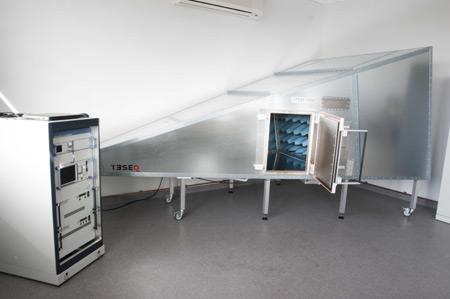
GTEM-1000 Chamber
Electromagnetic compatibility is the ability of devices, installations, or systems to function properly in a given electromagnetic environment without introducing additional electromagnetic disturbances into that environment or into other devices whose proper functioning could be disrupted as a result. The controller under test is isolated in a GTEM-1000 chamber to ensure that the electromagnetic waves being tested originate from the device in question and not from other electronic devices.
The chamber is equipped with an antenna that measures the level of generated electromagnetic waves, and a spectrum analyzer displays the measured signal level accordingly. In addition to measuring electromagnetic interference, the test setup allows for controlled interference with the controller located inside the chamber. In this way, the electronics’ immunity to interference encountered while driving a car is tested. The chamber is equipped with a signal generator, two RF power amplifiers, and a spectrum analyzer that displays the frequency amplitudes generated by the device under test. All electronic devices have applicable standards defining the limits for the amplitudes of generated interference. The spectrum analyzer determines whether these standards are met.
ESD testing station.
The term ESD (ElectroStatic Discharge) is commonly used in electronics and industry to describe momentary unwanted currents—i.e., electrostatic discharges—that can damage electronic equipment. Electrostatic charges—expressed in volts—are generated when two surfaces interact, such as when an electrified human body comes into contact with a device. In such cases, a spark gap occurs with a voltage ranging from several to several dozen kV.
Electrostatic discharge (ESD) is a serious problem for electronic components; many devices are sensitive to ESD, such as integrated circuits and hard drives. ESD testing is governed by relevant standards, which are stored in the ESD generator’s memory. These tests typically involve voltages ranging from 8 to 15 kV.
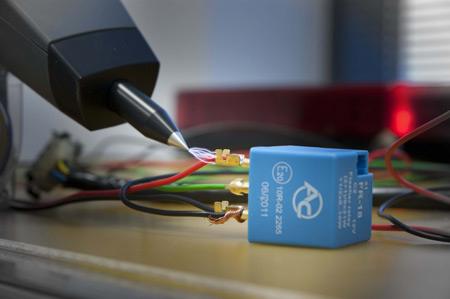
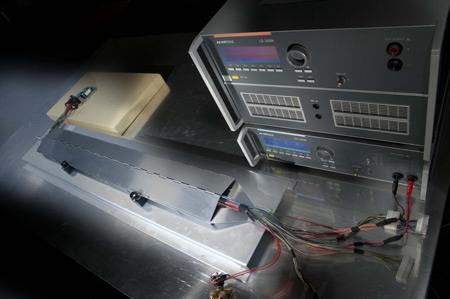
Test stations for conducted emission measurements
All electronic devices in motor vehicles are sources of unwanted electromagnetic emissions, which arise as a result of switching DC voltage under load. The conducted emission measurement station at the AC SA Research and Development Center is used to simulate power supply disturbances originating from the battery and their impact on the gas system’s electronics. These disturbances can result from many factors, including the activation and deactivation of windshield wipers, interference from the ignition system, or any other electronic system. Generators located on the test bench simulate voltage drops or surges in the system and detect any unwanted changes in the supply voltage. The types of simulated disturbances are regulated by a series of standards. They are pre-programmed into the generators, ensuring a quick and easy testing process. The test bench also offers the ability to generate disturbances not covered by standards that may occur in a vehicle. In such cases, the disturbances are recorded in the vehicle and then transferred and reproduced in the generators.
See also
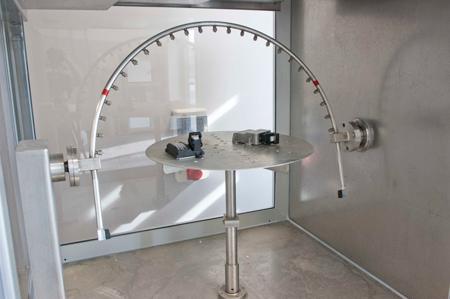
Environmental Testing Laboratory
We test how electronics respond to extreme temperatures, humidity, corrosion, and precipitation—this is how we create technology that can withstand anything the world throws at it.
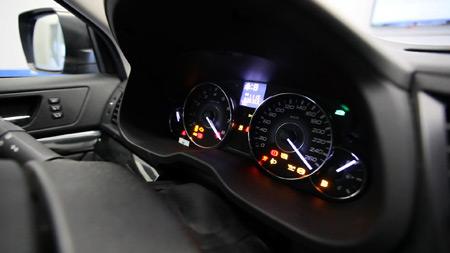
Automotive Laboratory
Here, we simulate the entire process—from test drives to comprehensive vehicle analyses—to develop technologies ready for everyday use.
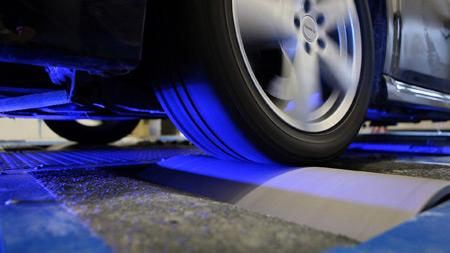
Chassis dynamometer
We analyze vehicle behavior on a dynamic test bench to ensure our solutions perform flawlessly in motion.
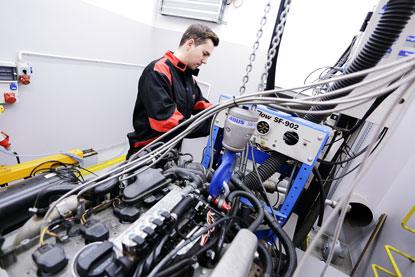
Engine dynamometer
Precise measurements of engine performance allow us to develop systems that are efficient, stable, and ready for any test.